Love’s Practitioner
Curated by
Julika Bosch
Artists
Renate Bertlmann, Alice Channer, Talia Chetrit, Ja Jess, Iosif Király
Aurora Király, Meret Oppenheim, Sarah Pucci, Haiqing Wang
Exhibition
11.09. - 28.10.2026
Performance
11.09.2026, 8 pm
“Donor: The Rumours Are Heirs” by Ja Jess
including vocals, spoken word and movement & involving singer and dancer Leonie Türke
The exhibition Love’s Practitioner brings together works by artists from several generations who explore emotional bonds and love as an active connection with others, as well as an extension of the self through others. In this context, love is viewed as a physical and mental process of attunement to and with others that sustains relationships and integrates the growth and well-being of others with one’s own state of being.*1 Artists of different generations covering almost all of the last century, from Ja Jess (b. 1998), Haiqing Wang (b. 1994), Talia Chetrit (b. 1982), Alice Channer (b. 1977), Aurora Király (b. 1970) and Iosif Király (b. 1957), to Renate Bertlmann (b. 1943), Meret Oppenheim (1913-1985) and Sarah Pucci (1902-1996), each develop their own visions of contact zones and processes of being. In this context, love does not appear as a romantic ideal, but as an everyday practice that is manifested in touch, care, empathy, memory, artistic collaboration, or in reading, writing and singing—as a process of engaging with one another. At the same time, this represents a turn towards feeling, sensing, and remembering, which contrasts the concept of a definitive, coherent self with a living, open process.
The entrance hall presents works from several series by Ja Jess. The artist explores discarded as well as new roles for the self, and the way they are constituted. The works tell the stories of the personas of varying genders and characters inhabited by Jess. The series here is linked to an egg donation performed in Denmark. An oval UV-Print on glass depicts the fertilized egg outside of a body. A body of text hung in a musical ornament depicts yet another – but virtually – fertilized, egg cell. Here, the combination of Jess DNA and a mosaic reference DNA are read as notations. The immaculate conception shows DNA sequences responsible for communication (language and voice production) combined with the texts of Hildegard von Bingen. The liturgical chant symbolizes oral transmission across generations. Every 20 minutes the composition is sung by AI generated voice transmitted on the window of the exhibition.
Sensations of touch and the boundaries between bodies also feature in the works of Renate Bertlmann, who has been exploring social norms and gender roles since the 1970s. Sexuality, desire, love, and gender converge here in forms such as razor-sharp breasts and body parts made of baby pacifiers and condoms.
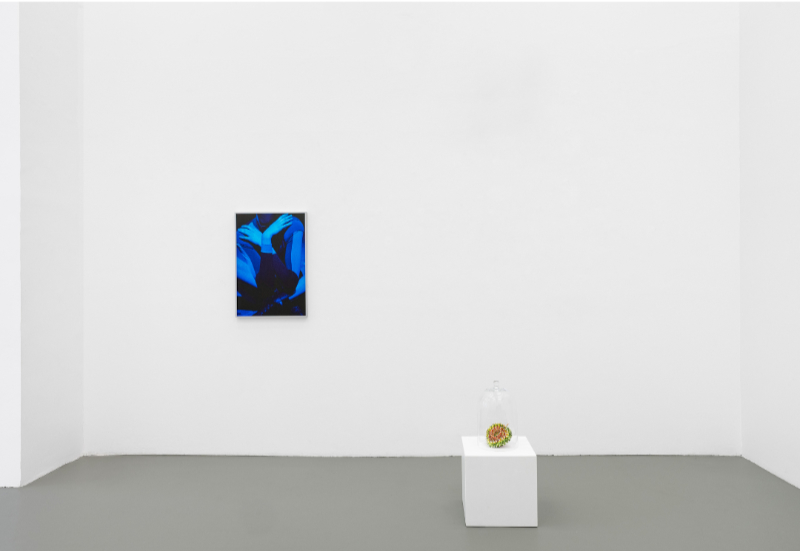
Talia Chetrit’s Blue Angel projects a psychological tension between contact, intimacy, and cool distance. The crossed arms, seen in close-up, shield the body from the camera, the viewer, and thus also from the male gaze. At the same time, the gesture evokes the presence of an additional body or bodiless power (angel).
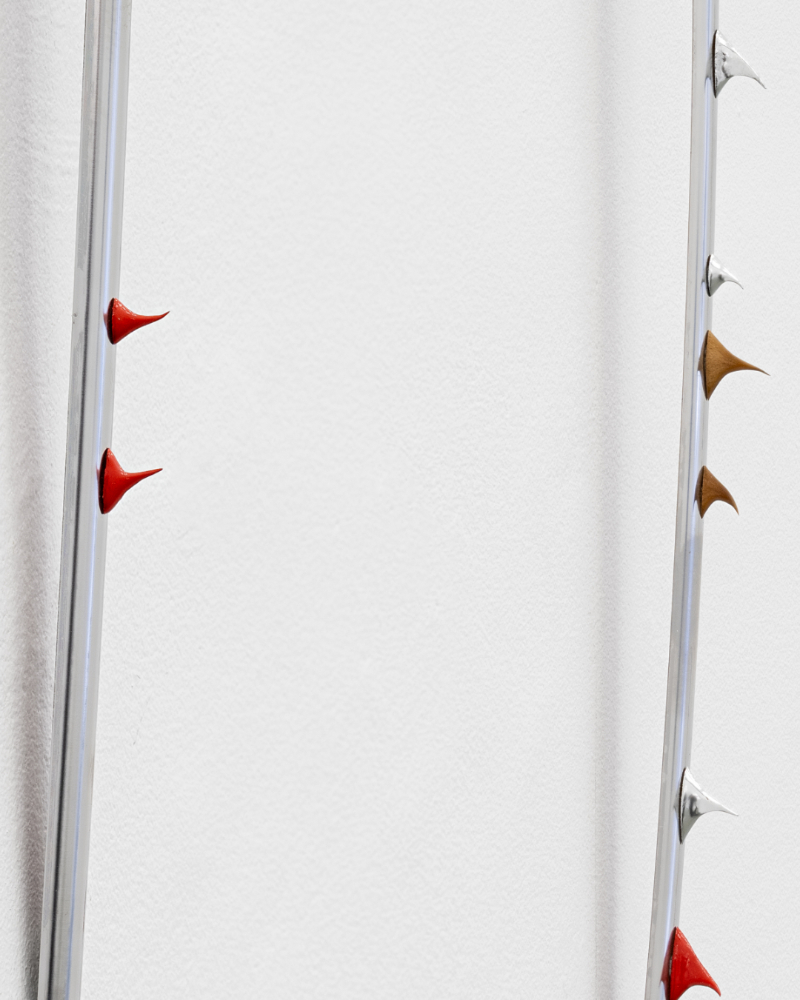
Alice Channer’s works are created from objects and materials found in her immediate surroundings—drawn from both industrial and natural production processes. Channer transforms the pursuit of sleek perfection inherent in capitalist modes of production into imaginative power. She also likens artistic creation to birthing: ‘I’m interested in showing— in very imaginative, often surreal, sometimes erotic, sometimes terrifying ways—the ways in which the objects I make are born.’ *2 In Climber (Sprinter), chrome strips from a Mercedes Sprinter, studded with finely lacquered red rose thorns, grow vertically up the wall. They seem to be climbing upwards, expanding in a fragile yet resilient way. In a conversation about Julia Ducournau’s film Titane, in which a woman conceives a child with a car and later gives birth to it, Channer remarked, ‘I deeply appreciate the way Ducournau’s films accompany bodies through multiple transitions and changes of state— surely also an act of love. *3
Sarah Pucci illustrates that the material world can extend into spiritual realms and that works of art, as places of transition, create contact zones. Her elaborate beadwork pieces, gestures of affection, were always gifts for her daughter in Europe. Pucci, who proclaimed herself to be ‘mother of a famous artist’, in turn became widely known due to her daughter’s efforts in organising joint exhibitions.
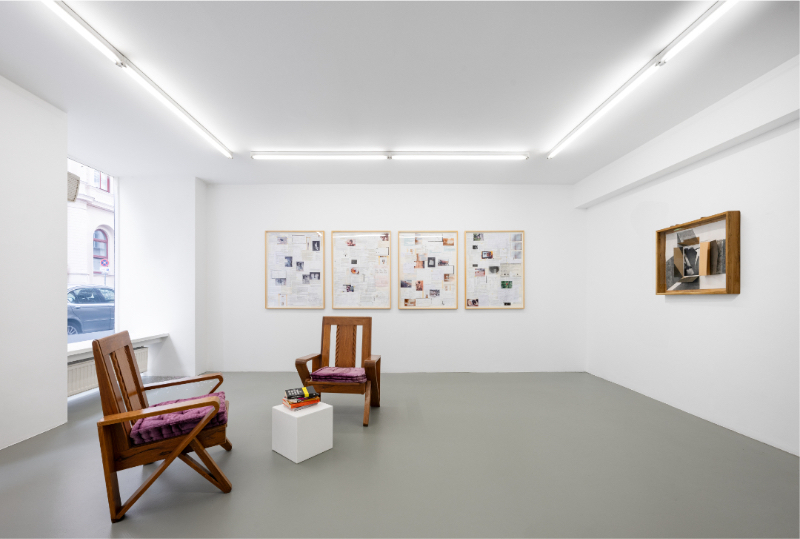
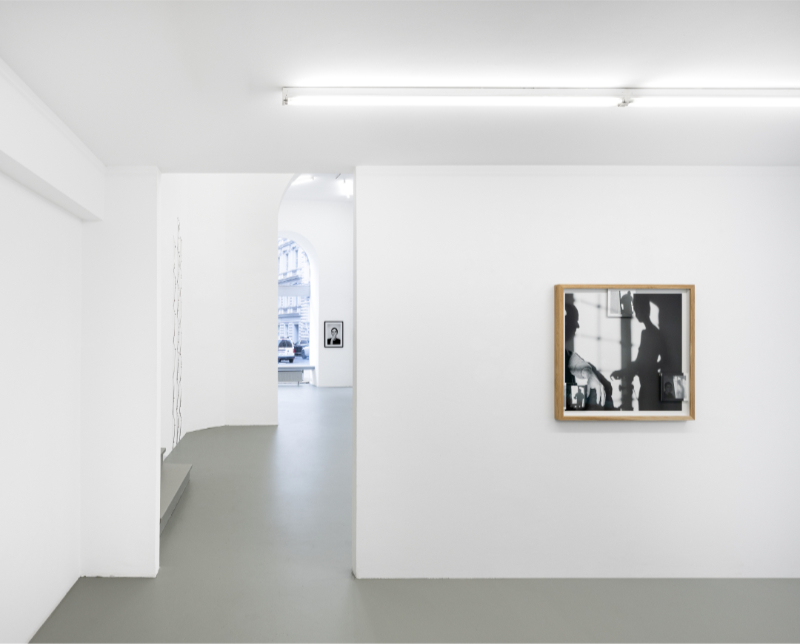
A large section of the exhibition features photographs and collages by Aurora Király and Iosif Király. In the way that a single photograph may shape memory but never fully capture it, or as the self is never constituted solely by a single person, Iosif Kiralys works reject linear narratives in favour of synchronicity and multiplicity. While he gained international recognition as part of the Fluxus-related Romanian mail art movement of the 1980s and as a member of the subREAL group in the 1990s, Aurora Király has only recently been recognised for her series Melancholia (1997–99) and Viewfinder (2014– present), which are now represented in the MoMA collection and elsewhere. Her exploration of self-image, subjectivity and memory evolved from feminist theories and role models such as Claude Cahun. The Melancholia series captures moments of attention, contemplation, self-reflection, melancholy, regeneration, as well as rare moments of joy and connection. These self-reflective photographs later gave rise to further works in various media, including the Viewfinder collages, in which photographs literally unfold before the viewer. Between 2001 and 2009, Aurora Király directed Galeria Nouă, one of Romania’s most significant art spaces dedicated to photography. Since 2007, she has taught at the Department of Photography and Dynamic Image at the National University of Arts in Bucharest, where Iosif Király also teaches and which he co-founded in 1995. These roles, as well as her family life, shape her artistic process and are reflected in the diaries exhibited. In these, her research on Claude Cahun, doctor’s appointments, and email correspondence with curators are equally visible, revealing the conditions that both limit and enable artistic work.
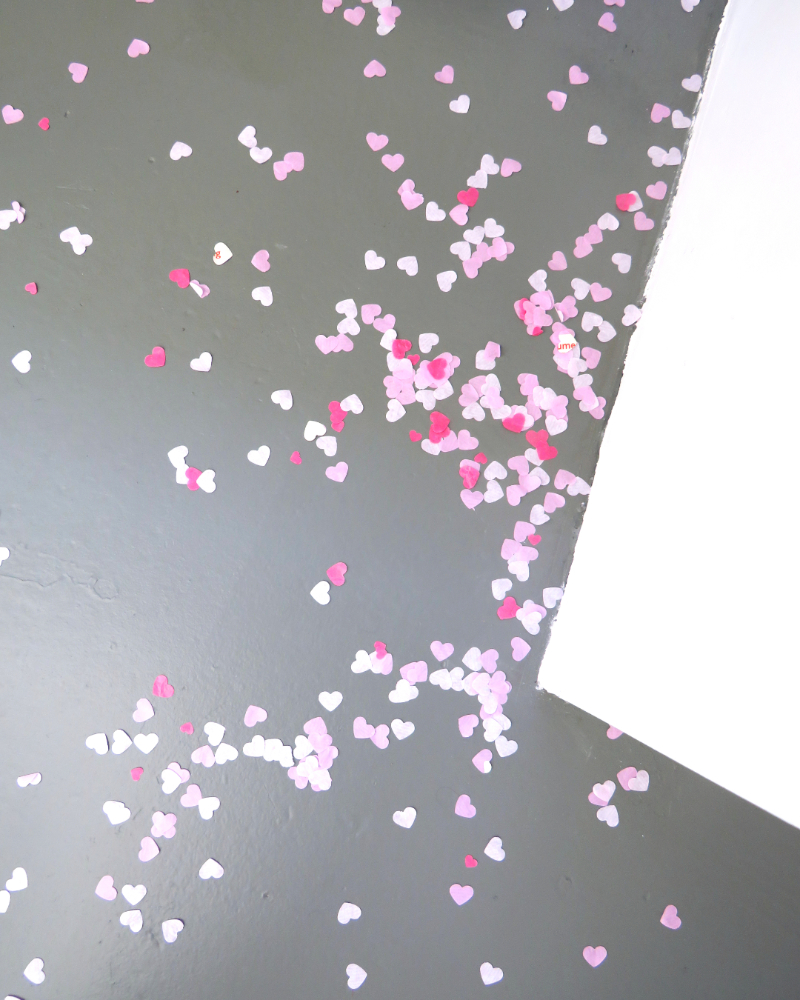
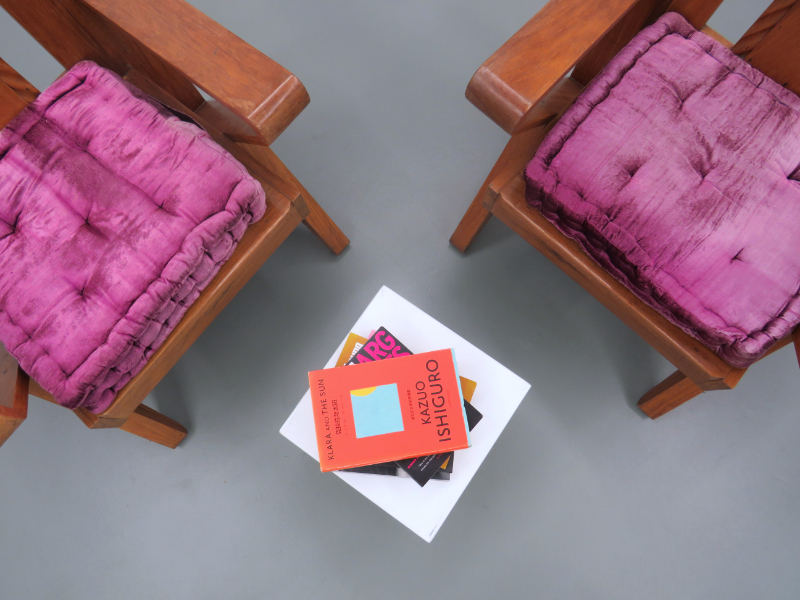
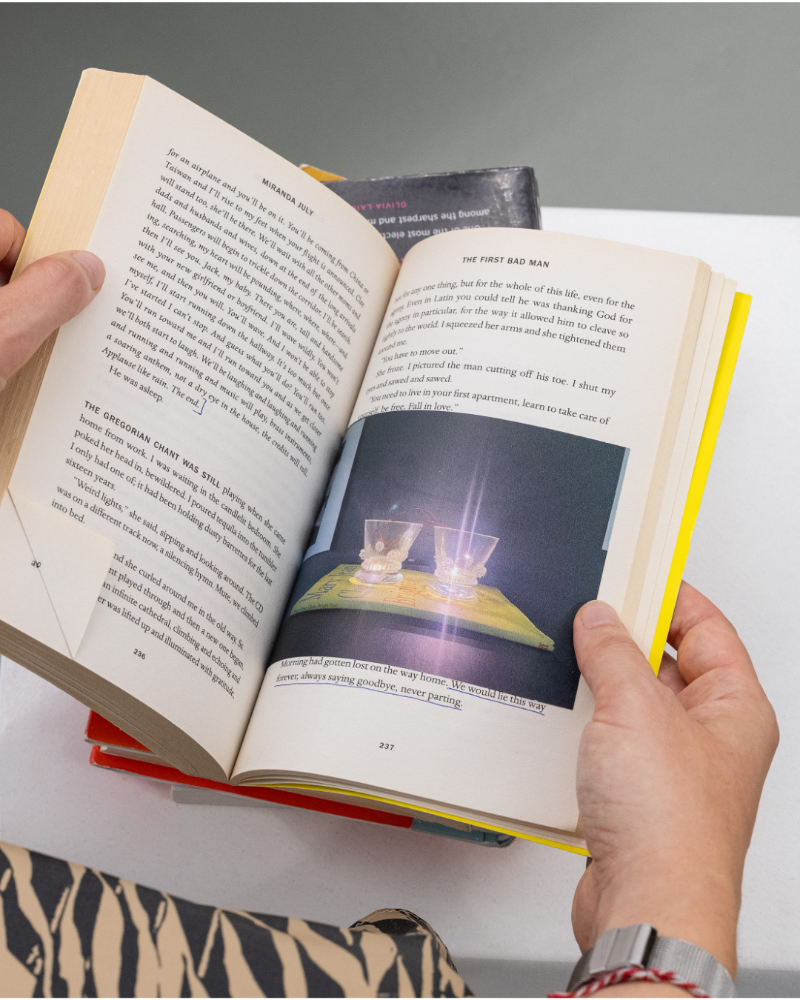
Reading, immersion, and reflection appear as essential elements of Haiqing Wang’s work. Her ongoing project Yours features books owned by the artist—including works by Kazuo Ishiguro, Miranda July, Ghislaine Leung, Maggie Nelson, Ocean Vuong—in which readers can find notes and hidden snapshots from everyday life. The photos reveal intimate moments of friendship, desire, and love within her queer community. The potential to feel a close connection to the thoughts of an unknown author by reading is here accompanied by the opportunity to trace the journey of (another) active reader, the artist. The insertions also reveal connections between the text and the small moments of everyday life. Wang also added another work to the show, Heart by Heart. It is composed of heart-shaped confetti, hand-punched by the artist from wrapping paper used to wrap flowers gifted to her by friends.
On the way to the upper floor, Meret Oppenheim’s Glove (for Parkett, No. 4), 1985, alludes to contact zones: the surface of the glove depicts the veins of the back of a hand, making visible what usually remains hidden—the vulnerability and vitality of the body. They might also alter the physical experience of social norms (e.g. kissing or shaking hands). Here, the glove is combined with a set of red pleaser shoes by Ja Jess. They may be worn by a second person and were used in a performance for a monologue delivered by two speakers. Julika Bosch, 2026
*1 Love is seen here as an active connection, extensively described by Bell Hooks, who linked her description to a quote of M. Scott Pecks (with an echo of Erich Fromm): „the will to extend one’s self for the purpose of nurturing one’s own or another’s spiritual growth.“ In Peck, M.S.: The Road Less Traveled, 1978, quoted by Hooks in: All About Love: New Visions, New York, 2001, p. 4. The exhibition title is also connected to Hooks, p. XX.
*2 „I’m interested in showing – in very imaginative, often surreal, sometimes erotic, sometimes terrifying ways – the way in which the objects are born.“ Maisie Bruno: Alice Channer: Birthing Pools. Quelle: https://www.nowness.com/series/private view/alice- channer-birthing-pools (18.7.2026)
*3 „I deeply appreciate the way Ducournau's flms accompany bodies through multiple transitions and changes of state – surely also an act of love.“ Alice Channer im Gespräch mit der Kuratorin, 14.6.26.
This exhibition is part of the gallery festival with international curators in Vienna
curatedby.at
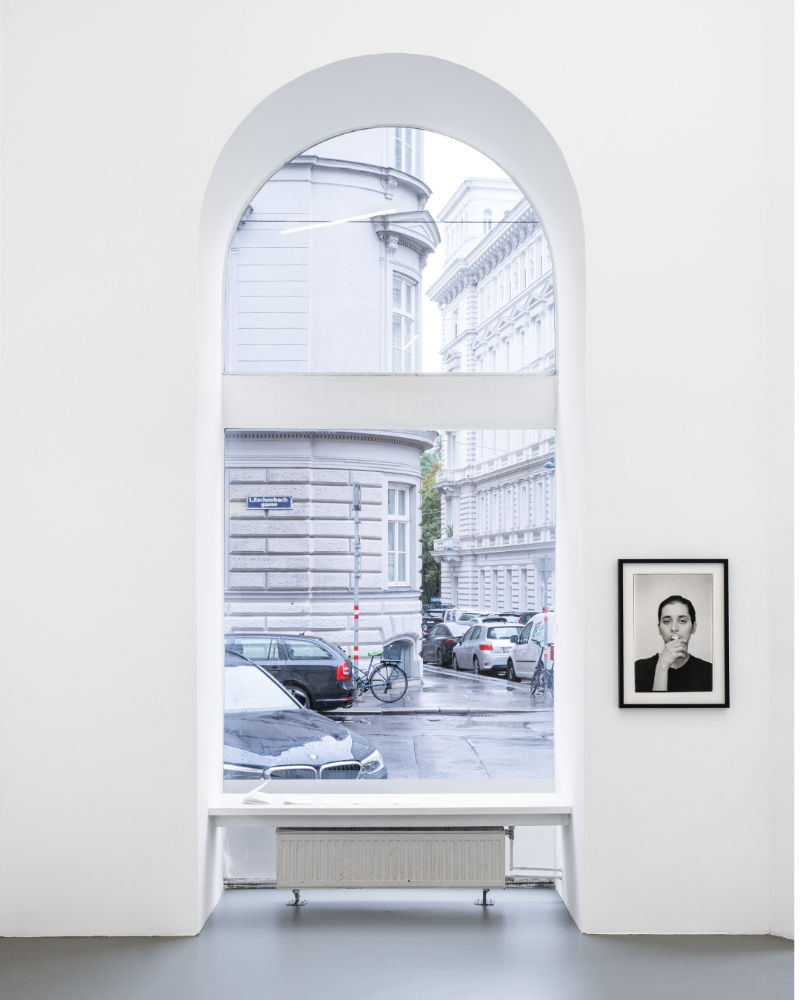
Exhibition view "Love´s Pratictioner
Curated by Julika Bosch
Artwork „Silver Lips“, 1997 by Iosif Kiraly
Photo © Simon Veres
Courtesy Anca Poterașu Gallery
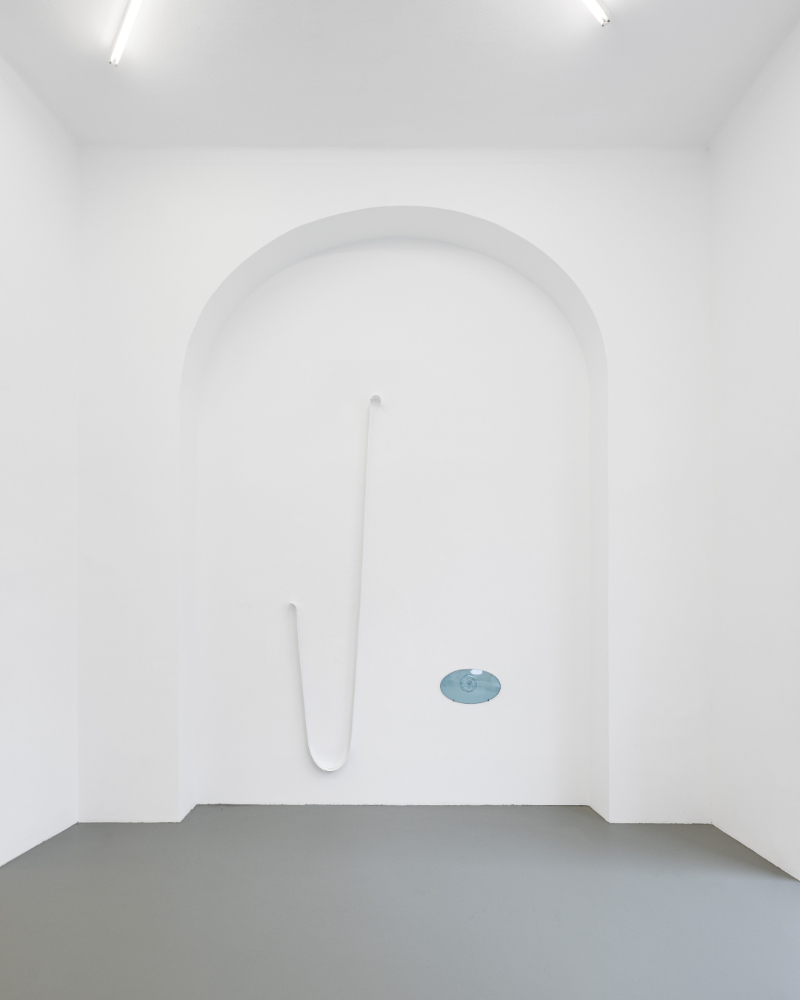
Exhibition view "Love´s Pratictioner
Curated by Julika Bosch
Artworks by Ja Jess, „Ornament“, 2026 and
from the body of works „Donor: Baby was born dreaming“ : „Ei“, 2026
Photo © Simon Veres
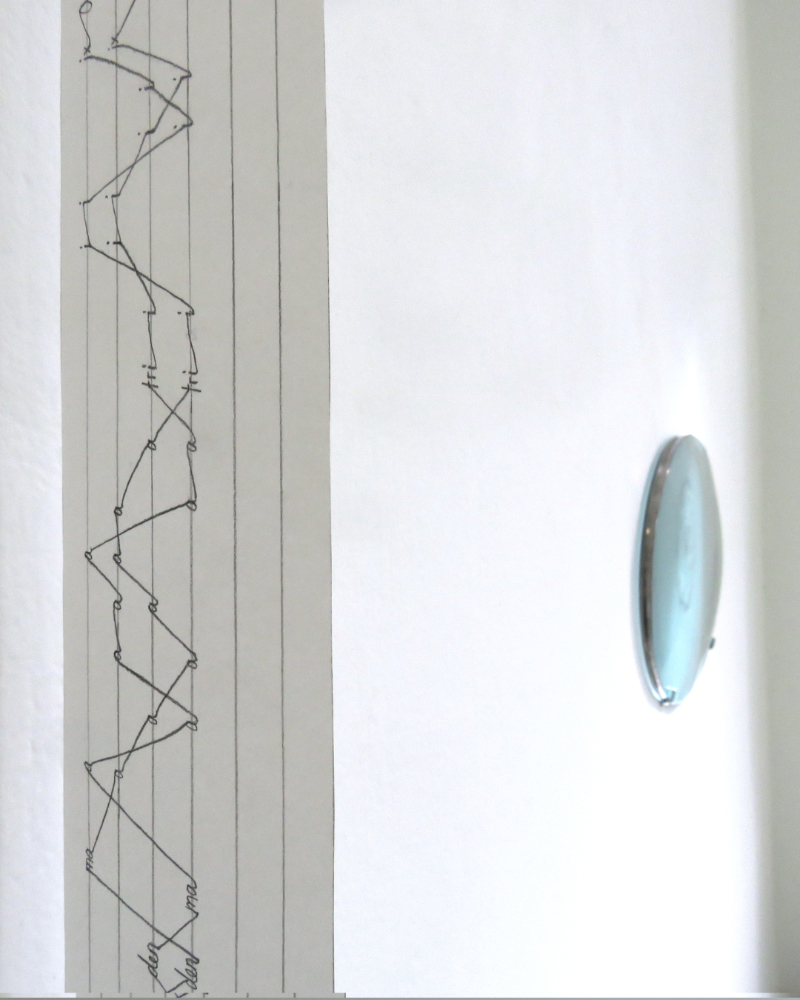
Exhibition view "Love´s Pratictioner
Curated by Julika Bosch
Artworks by Ja Jess, „Ornament“, 2026 and
from the body of works „Donor: Baby was born dreaming“ : „Ei“, 2026
Photo © Carol Tachdjian
11.09.2026, 8 pm
“Donor: The Rumours Are Heirs” a performance by by Ja Jess
including vocals, spoken word and movement & involving singer and dancer Leonie Türke
Galerie Steinek is pleased to open the exhibition Love‘s Practitioner, curated by Julika Bosch, with a performance by Ja Jess. Jess explores discarded as well as new roles of the self, and the way they are constituted. Contact, touch, and prosthetics - as extensions of the body and connections to others - are central aspects of both the objects and the performances. In Donor: The Rumours Are Heirs, Jess performs alongside singer and dancer Leonie Türke @leolacy_ . Based on Jess‘s own DNA - which was sequenced as part of an actual egg cell donation they perfromed in Denmark - and a reference DNA sample, Jess has created a virtual embryo. The performance incorporates spoken text and chants of Hildegard von Bingen sung in the DNA sequences of the embryo‘s base sequences as notations. The part of the DNA, they extracted, is responsible for communication (language and voice production). The liturgical chant also symbolizes oral transmission across generations, while the movements point to the interconnectivity of bodies. They are further inspired by the reflexes of newborns, who are not yet fully separated from other bodies.

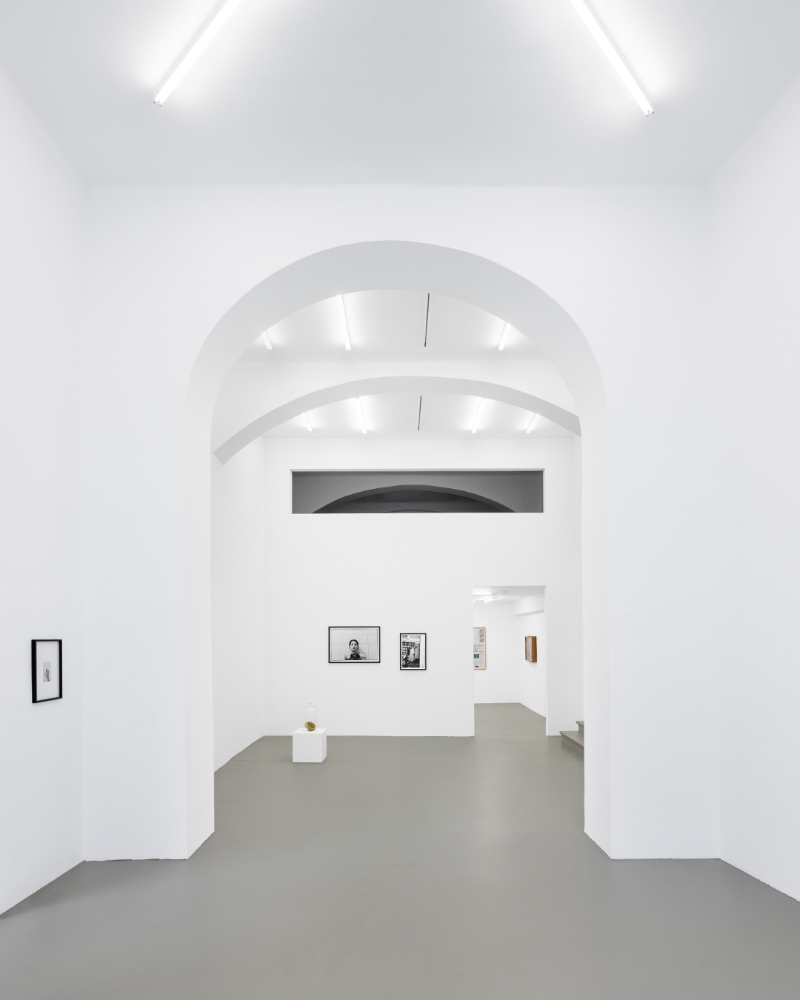
Exhibition view "Love´s Pratictioner
Curated by Julika Bosch
Photo © Simon Veres
Exhibition view "Love´s Pratictioner
Curated by Julika Bosch
Artwork, detail of „Climber (Sprinter)“, 2025 by Alice Channer
Courtesy Galerie Konrad Fischer, Photo © Simon Veres
Exhibition view "Love´s Pratictioner
Curated by Julika Bosch
Artworks „Blue Angel“, 2024 by Talia Chetrit (Courtesy Artist & Sies + Höke, Düsseldorf) and „Untitled“, 1980s by Sarah Pucci (Courtesy The Estate of Dorothy Iannone)
Photo © Simon Veres
Exhibition view "Love´s Pratictioner
Curated by Julika Bosch
Artwork "Heart by Heart", 2026 by Haiqing Wang
Hand-punched confettis made from wrapping paper
dimension variable, installation in situ
Photo © Carol Tachdjian
Exhibition view "Love´s Pratictioner
Curated by Julika Bosch
Artwork „Untitled_Mixed Diaries“ (4 parts), 2013 and Viewfinder #30, 2025 by Aurora Kiraly Courtesy Anca Poterașu Gallery
Books installation "Yours", 2026 by Haiqing Wang
Photo © Simon Veres
Exhibition view "Love´s Pratictioner
Curated by Julika Bosch
Artwork „Yours“, 2026 by Haiqing Wang
5 selected books, hand-written annotations, inserted photographs printed on static paper
Installation in situ, dimension variable
Photo © Carol Tachdjian
Exhibition view "Love´s Pratictioner
Curated by Julika Bosch
Artwork „Echoes_Shadows“, 1998–2022 by Iosif Kiraly (Courtesy Anca Poterașu Gallery)
Photo © Simon Veres
Exhibition view "Love´s Pratictioner
Curated by Julika Bosch
Artwork books installation "Yours", 2026 by Haiqing Wang
Photo © Simon Veres
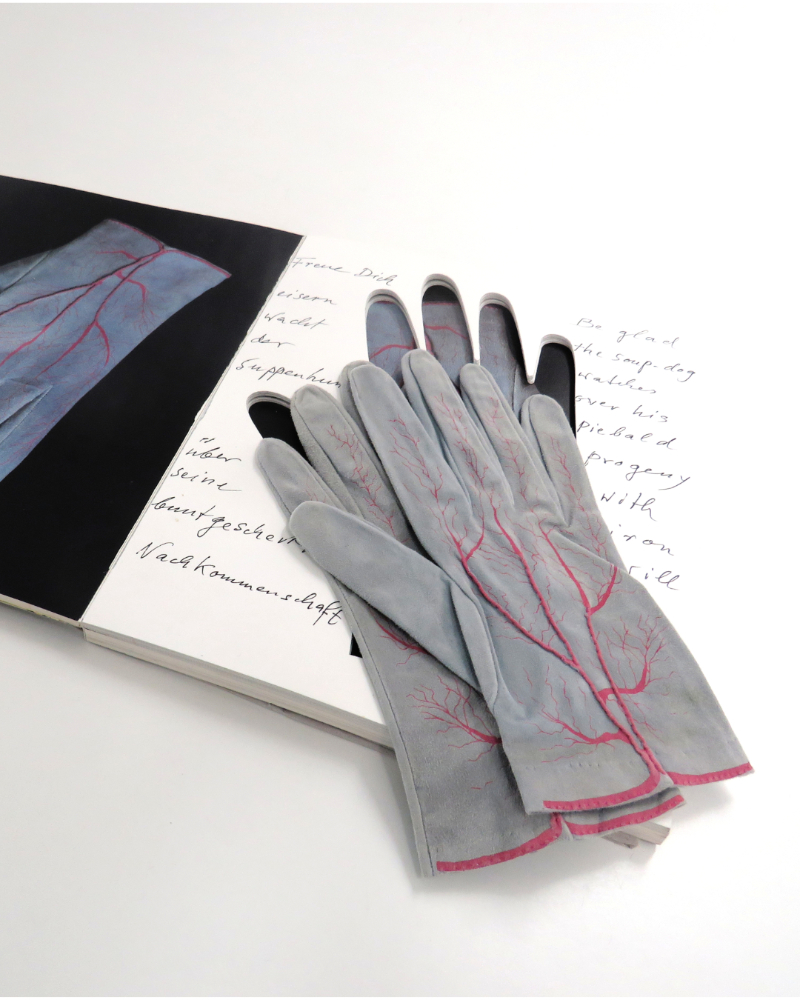
Exhibition view "Love´s Pratictioner
Curated by Julika Bosch
Artwork "Handschuhe mit Adern", 1985 by Meret Oppenheim (Courtesy Galerie Levy & Galerie Steinek)
Photo © Carol Tachdjian

Part of the exhibition "Love´s Pratictioner
Curated by Julika Bosch
Artwork „Zärtliche Berührungen - Tender Touches – Tableau“, 1976-2026 by Renate Bertlmann, Digital photography mounted on Dibond, 70 x 68,92 cm, Aufage 2/5+2 AP
Courtesy Galerie Steinek
Photo © Renate Bertlmann, Bildrecht Wien
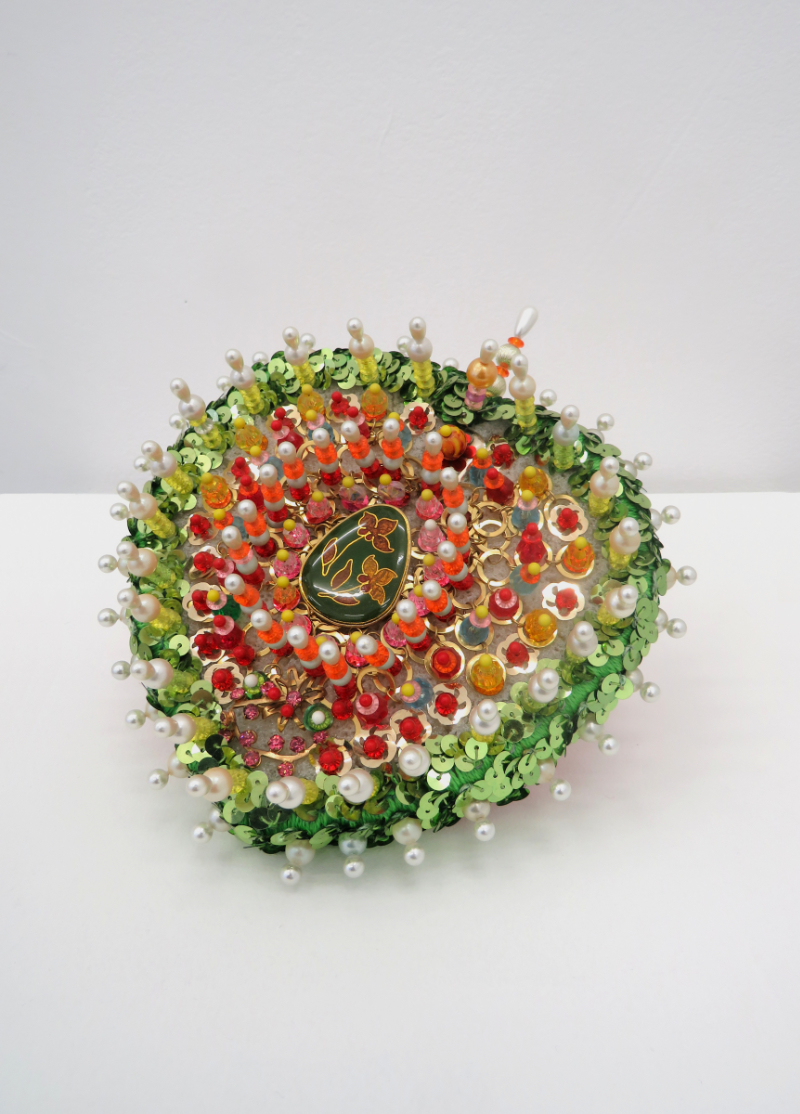
Part of the exhibition "Love´s Pratictioner
Curated by Julika Bosch
Artwork „Untitled“, 1980s by Sarah Pucci
Beads, sequins, pins, foam, medallion
20 x 18 x 9 cm
Courtesy The Estate of Dorothy Iannone
Photo © Carol Tachdjian